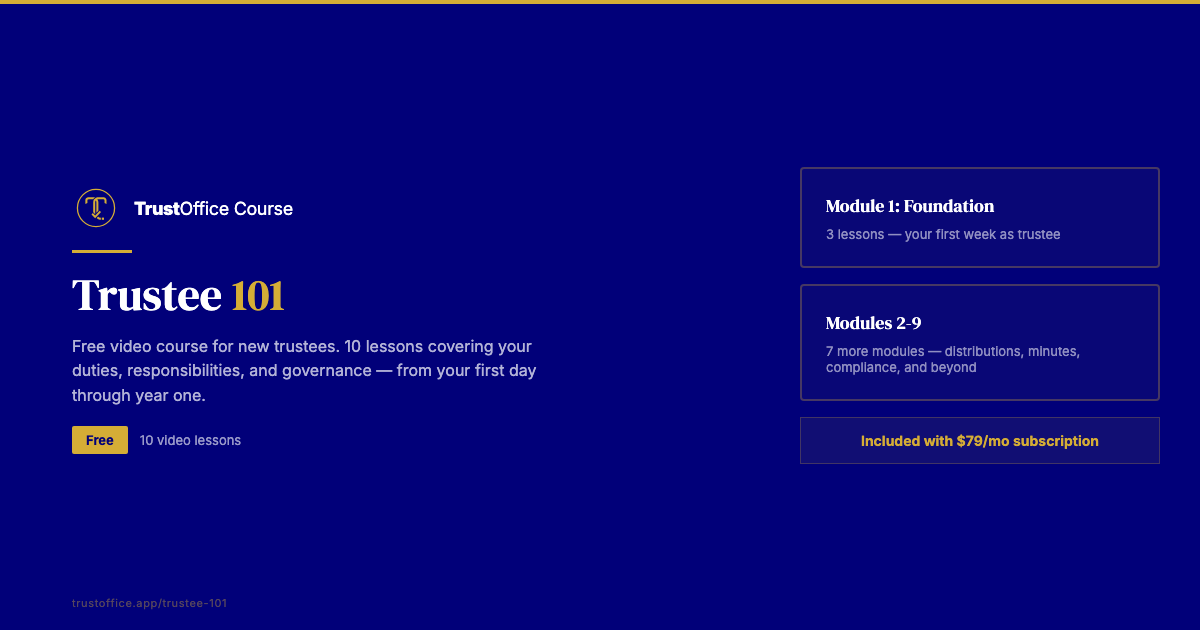
Free Trustee Course: Learn Trustee Responsibilities with Free Online Training for Nonprofit Leaders
Become enrolled in a Unpaid Trustee Workshop to Elevate Your Skills Right Now
Joining a gratis trustee program can markedly enhance one's professional expertise. It communicates core knowledge about fiduciary duties and investment management. Students can learn at their own schedule while building connections with experienced professionals. This opening not only deepens knowledge but also enables professional advancement. However, many may question what definite skills they can expect to secure and how these can be used in real-world applications.

Core Strengths You'll Achieve From a Free Trustee Course
A free trustee program provides participants with essential skills crucial for effective governance and management. The curriculum typically includes key topics such as financial literacy, permitting trustees to understand budgets, financial statements, and investment strategies. Participants also develop expertise into legal responsibilities, guaranteeing compliance with laws and moral principles.
In addition, the curriculum enhances strategic planning competencies, providing learners to help achieve sustained organizational intentions. Proficient communication competencies are one more important dimension, enabling trustees to present proposals transparently and coordinate with stakeholders in an effective manner.
Moreover, teamwork and leadership competencies are emphasized, promoting teamwork among board members and promoting a productive deliberation process. Dispute management methods are also covered, preparing participants to navigate disagreements professionally.
Fundamentally, these competencies not only equip individuals for their roles as trustees but also advance their overall management expertise, making them valuable assets to any organization.
Key Motives to Enroll in a Free Trustee Program for Career Development
Many career experts actively pursue methods for improving their careers, and enrolling in a free trustee course offers exceptional advantages that can greatly boost one's trajectory. To begin, these educational programs provide essential knowledge about fiduciary responsibilities, boosting a professional's standing in their field. Grasping the moral and legal obligations of a trustee can unlock new career opportunities and accountabilities.
Additionally, networking with industry professionals and peers during these training programs can produce beneficial relationships that may support career progression. Participants also acquire hands-on expertise in accounting and oversight, which are in great demand in multiple fields. Finally, the flexibility of digital learning enables individuals to learn at their own speed, making it simpler to balance education with current work responsibilities. Overall, enrolling in a free trustee course not only expands knowledge but can also significantly improve professional opportunities and career expansion.
Uncovering the Greatest Unpaid Trustee Program for You
How might one discover the most appropriate complimentary trustee program from the extensive range obtainable? First, individuals must assess their particular requirements and work targets, identifying what skills or knowledge deficiencies they intend to cover. Next, investigating curriculum and design is important; a comprehensive course outline can indicate whether the course will fulfill personal goals.
Additionally, considering the credentials of the instructors can give insight into the caliber of education provided. Testimonials and reviews from past students are crucial, as they reflect genuine experiences and results.
Finally, evaluating the adaptability of the course presentation—whether it is independent-paced or predetermined—can support in choosing a course that addresses one's lifestyle. By considering these aspects, participants can determine a more informed decision, ensuring the selected program aligns with their career goals and learning preferences.
Effective Strategies for Getting the Most Out of Your Trustee Course
Maximizing the benefits of a trustee course requires a strategic approach. Participants should begin by establishing clear goals, identifying specific skills or knowledge they wish to acquire. Engaging fully in the learning process is essential; this includes participating in discussions, asking questions, and collaborating with peers. Regularly reviewing course materials helps reinforce understanding and retention of important concepts.
In addition, it is beneficial to document information and compile outlines of key subjects, enabling easier revision afterward. Networking with peer attendees can provide useful perspectives and assistance, fostering a community atmosphere. Utilizing supplementary resources, such as suggested texts or web-based discussions, can enhance understanding and implementation of acquired knowledge.
Finally, utilizing the knowledge in concrete situations, whether through practical applications or simulations, reinforces learning and strengthens confidence in trustee accountabilities. By adopting these strategies, individuals can leverage fully their trustee course curriculum for growth in both personal and professional realms.
Practical Implementations of Trustee Abilities in Management
Trustee expertise are vital in effective governance, allowing individuals to navigate complex organizational landscapes. These expertise are critical for promoting openness, responsibility, and principled choices within various entities, including nonprofits, educational institutions, and corporate boards. Trustees equipped with robust analytical capabilities can assess organizational performance, fiscal well-being, and adherence to regulatory standards, thereby enhancing overall governance.
Moreover, effective interpersonal competencies permit trustees to engage with stakeholders, ensuring that diverse perspectives are recognized in governance decisions. Dispute management abilities are equally important, as they help maintain harmony and cooperation among board members and other stakeholders. Additionally, forward-thinking planning abilities allow trustees to synchronize organizational goals with wider purposes, ensuring sustainability and growth. In this way, the use of trustee skills in governance reinforces institutional frameworks but also cultivates trust and integrity within communities and organizations.
Often Asked Inquiries
Do Industry Bodies Recognize Free Fiduciary Classes?
Complimentary trustee training may not consistently be accepted by professional organizations. Recognition typically depends on the course provider and the specific accrediting body, so participants should check credentials before enrolling in any offering.
What Duration Does a Typical Free Trustee Course Require to Complete?
A typical costless trustee offering generally takes between four to eight weeks to finish. Course duration may vary depending on the vendor, content depth, and participant engagement, allowing for freedom in learning schedules.
Can I Obtain a Certificate Following Finishing a Free Trustee Course?
Yes, attendees can typically obtain a diploma after completing a free fiduciary program. However, certification availability may differ by provider, so people should verify the particular requirements with the course organization before enrolling.
What Limitations Apply on the Number of Fiduciary Courses I Can Enroll In?
Typically, there is no limit to how many trustee courses a person can participate in. Participants are recommended to take multiple courses for expanding their knowledge and skills in trustee roles and oversight.
What Requirements Are Necessary to Register in a Free Trustee Course?
To important guide join a free trustee class, participants typically require a basic understanding of financial concepts, pledge to the course duration, and sometimes prior experience in fiduciary roles. Specific requirements may fluctuate by institution.